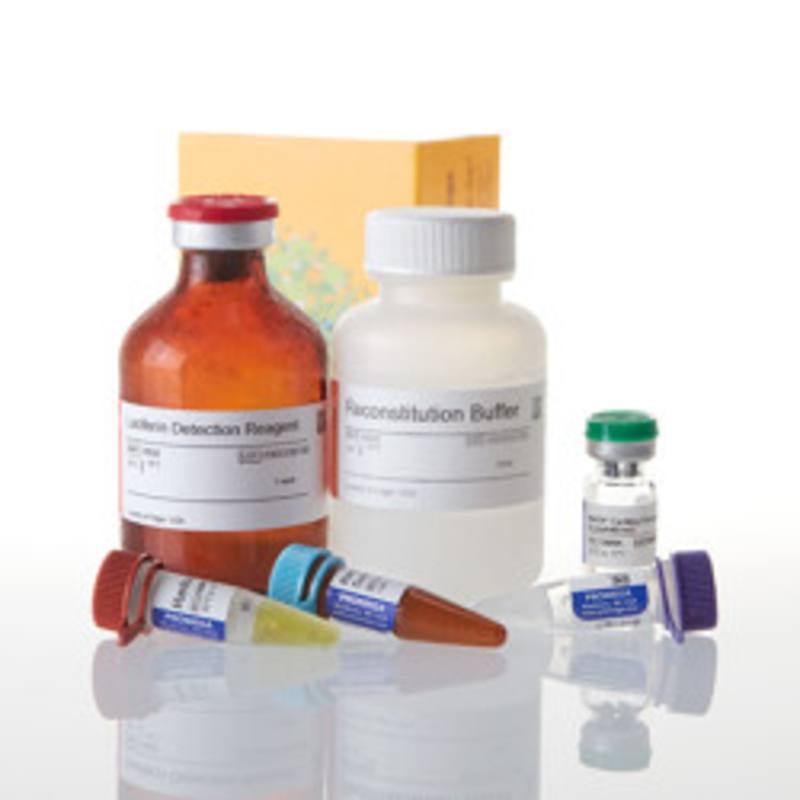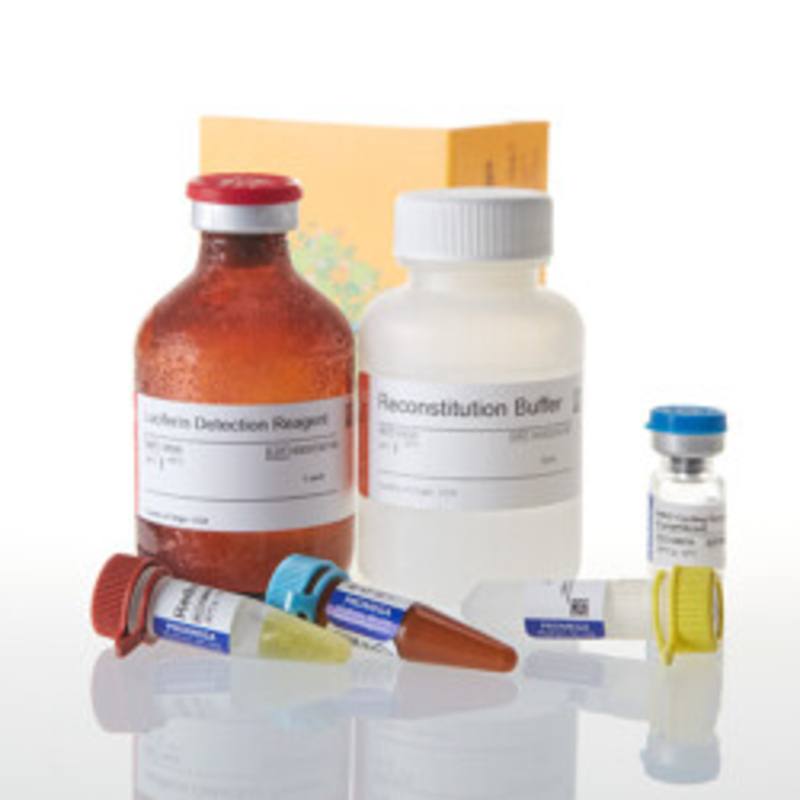

NADP/NADPH-Glo(TM) Assay, 10ml
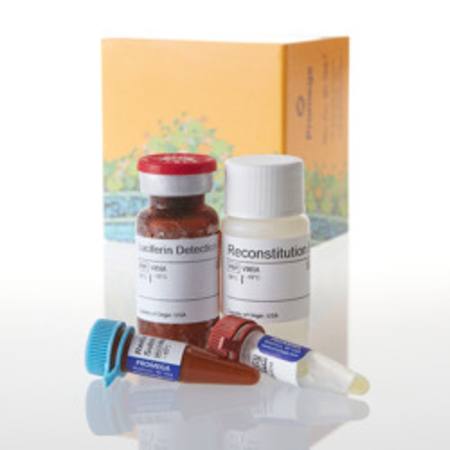
The in vitro enzyme-based NAD(P)H-Glo Detection System is a homogeneous, bioluminescent assay to quantitatively monitor concentration of reduced forms of the nicotinamide adenine dinucleotides, NADH and NADPH, and does not discriminate between them. The oxidized forms, NAD+ and NADP+, are not detected and do not interfere with quantitation. In the presence of NAD(P)H, a reductase enzyme reduces a proluciferin reductase substrate to form luciferin, which is quantified using Ultra-Glo Recombinant Luciferase; the light signal produced is proportional to the amount of NAD(P)H in the sample. The reductase and luciferase reactions are initiated by adding an equal volume of a single reagent containing reductase and Ultra-Glo Recombinant Luciferase to a NAD(P)H-containing sample. Requiring only a 40- to 60-minute incubation, has a broad linear range and high signal-to background ratio, the assay is well suited for measuring NAD(P)H production or consumption in high-throughput formats.